Impunity and Racism
From Racist Imperial Policy to American Exceptional Impunity in International Law.

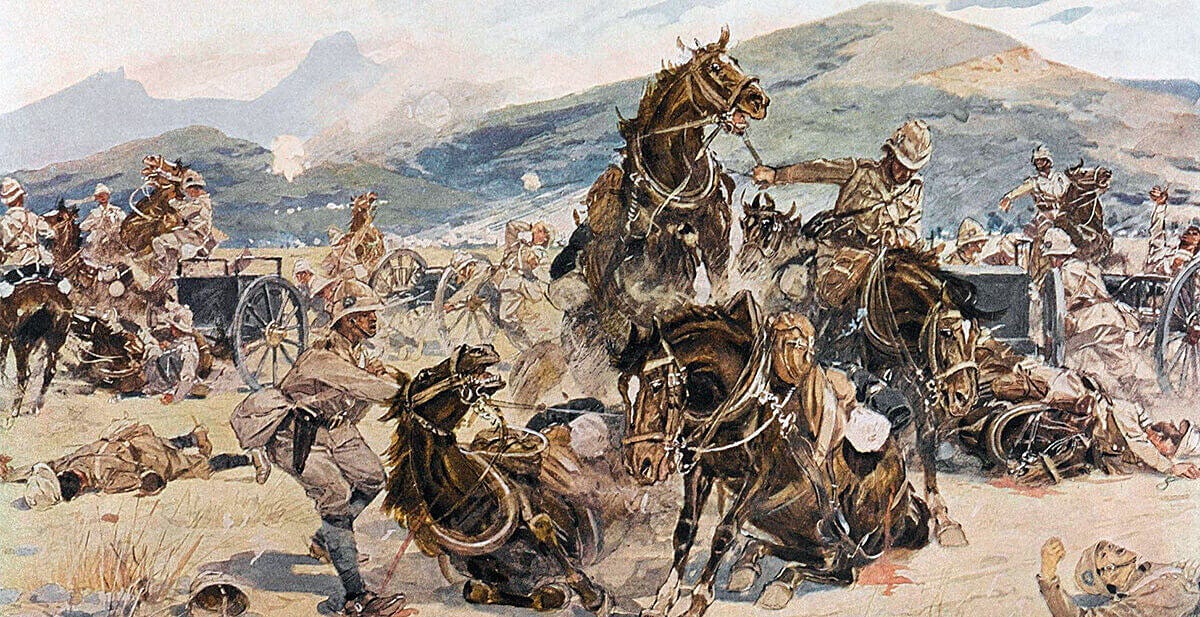
Guns of 14th and 66th Batteries Royal Field Artillery come under fire at the Battle of Colenso on 15th December 1899 in the Boer War: picture by Gerlach
The United States secured its current position above international law a position of impunity and exceptional treatment not through some natural evolution or accident of history. It's the deliberate result of racist imperial ideology that was systematically transmitted from British colonial theory to American foreign policy, then embedded into the legal structures that govern the world today.
The story starts with a simple racist premise: that Anglo-Saxon peoples are inherently superior and therefore have the right—the obligation—to rule over "lesser" races. British imperialists didn't just practice this; they built elaborate legal and philosophical frameworks to justify it. When Americans took over as the dominant global power, they didn't reject this thinking. They adopted it wholesale, complete with its racist foundations and legal escape hatches.
The intellectual architecture of great power impunity originated in British imperial ideology that combined racist theories of racial hierarchy with legal frameworks for operating beyond international constraints. Rudyard Kipling's 1899 poem "The White Man's Burden," written explicitly to encourage American annexation of the Philippines, crystallized this thinking by transforming imperial conquest from a legal violation into a moral obligation. The poem depicted colonized peoples as "half-devil and half-child," inherently requiring Anglo-Saxon guidance, thus placing imperial powers above ordinary legal accountability through claims of moral superiority.
British imperial legal theory developed sophisticated frameworks for exempting the empire from international law through doctrines like Crown immunity ("the king can do no wrong"), parliamentary sovereignty overriding international obligations, and "imperial prerogative" granting special legal status for civilizing missions.
The racist foundations were explicit and systematic. Cecil Rhodes articulated the core ideology: "I contend that we are the first race in the world, and that the more of the world we inhabit the better it is for the human race." This racial hierarchy provided justification for legal exceptionalism through Anglo-Saxon racial theory, biological determinism attributing political capabilities to race, and Social Darwinist evolution applied to justify racial domination. The ideology created legal pluralism as an imperial tool, with English law selectively applied based on colonial objectives while legal protections were withheld from territories marked for subordination.
The key moment came at the 1919 Paris Peace Conference. Robert Lansing, heading the U.S. delegation, made sure that the new international legal order would protect great powers from accountability. His philosophy was brutally simple: military authorities should judge their own war crimes. If that sounds insane, it was—and it was deliberate. Lansing and his colleagues were terrified that holding Germany accountable for war crimes might someday be applied to American actions.
“[Robert] Lansing exhibited one curious state of mind,” observed presidential advisor Edward House during an earlier debate over the U.S. response to the sinking of the Lusitania. “He believes that almost any form of atrocity is permissible provided a nation’s safety is involved.” When House asked Lansing who should best determine the level of atrocity appropriate to protect the nation, Lansing replied, “the military authorities of the nation committing the atrocities.” Thus, the leaders of the armed forces accused of committing a crime should be the final judge of whether the act was justified in the interests of the nation. Lansing believed that any new precedents set by the Paris conference against war crimes would probably endanger the United States in a future crisis, and he insisted that his government exempt itself from international commitments that might limit its freedom of action.”
Simpson, Christopher
The Splendid Blond Beast: Money, Law, and Genocide in the Twentieth Century (Forbidden Bookshelf)
This wasn't theoretical. Winston Churchill in the late 1800s reported on exactly how imperial powers operated: systematic violence against colonial populations justified as "civilizing missions." In Sudan, Kenya, and elsewhere, Churchill oversaw or participated in what we'd now recognize as war crimes and crimes against humanity. The justification was always the same—these people needed to be civilized, and violence was regrettable but necessary for their own good.
The legal architecture they created still protects America today. The UN Security Council veto system, Status of Forces Agreements, sovereign immunity doctrines, and systematic withdrawal from international treaties—all of this traces directly back to the imperial legal frameworks designed to keep powerful nations above the law while subjecting weaker ones to it.
I'm not arguing this is a conspiracy. It's worse than that—it's an ideology so deeply embedded in our international system that most people don't even see it. The same racist logic that said British rule was good for Africans now says American intervention is good for the world. The same legal frameworks that protected imperial administrators from prosecution now protect American officials from the International Criminal Court.
The evidence is overwhelming once you look for it. The intellectual lineage is clear, the transmission mechanisms are documented, and the legal structures are still functioning exactly as designed. What we call the "rules-based international order" is actually a system designed to exempt the rule-makers from the rules they impose on everyone else.
This matters because it explains why international law consistently fails to hold powerful nations accountable while successfully prosecuting leaders from weaker countries. It's not a bug in the system—it's the whole point. Until we confront the imperial and racist foundations of our international legal order, we'll keep getting the same results: justice for the weak, impunity for the strong.